
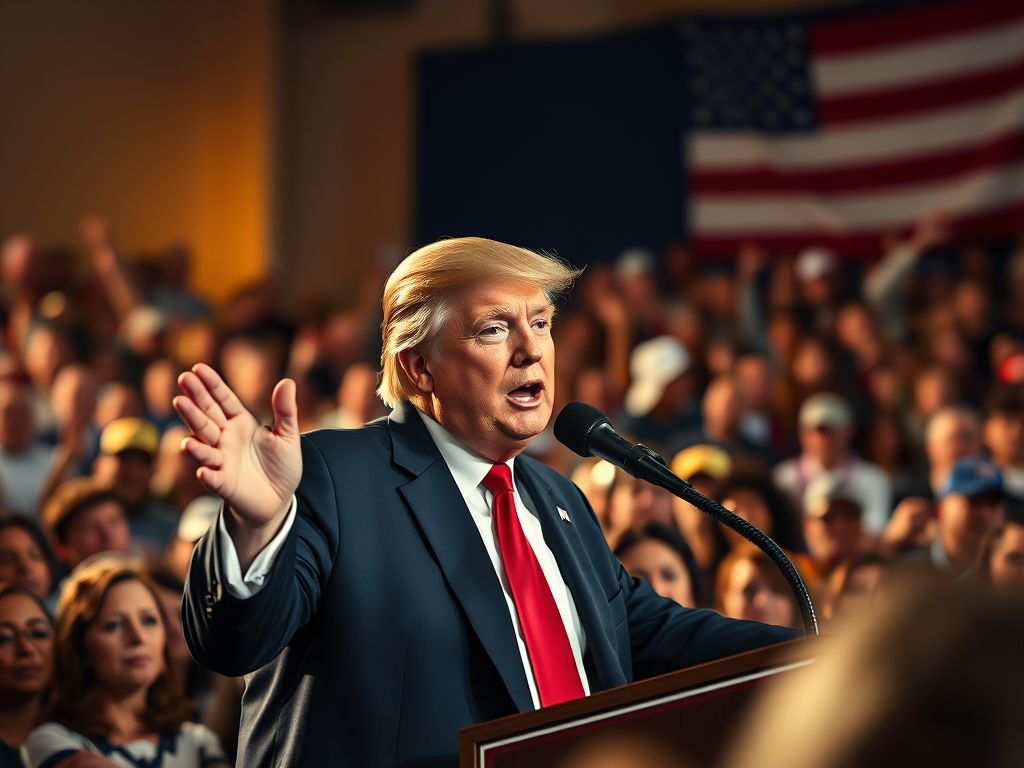

In the days leading up to Donald J. Trump’s inauguration in 2017, he assured Americans that his family business would refrain from exploiting his presidency. Fast forward nearly eight years, and he is no longer making such commitments.
As he campaigns for a second term, the former president is leveraging various new business opportunities without reinstating the limitations he had previously set. Financial documents and discussions with knowledgeable sources reveal that the ethical guidelines he implemented while in office were criticized for their insufficiency, yet they would have restricted much of the current business activity.
Even if Trump were to agree to avoid future international business—central to his earlier ethics plan—the recent agreements are likely to remain unaffected, as they were quickly announced before any new restrictions could apply.
This year, the Trump Organization has engaged in real estate projects in Vietnam, Saudi Arabia, and the UAE, all significant players in U.S. foreign policy. Additionally, Trump transformed his social media platform into a publicly traded entity, allowing foreign investors to buy shares, and he launched a cryptocurrency initiative that could come under scrutiny from federal regulators.

The intersection of Trump’s business and political aspirations creates potential conflicts of interest that exceed those he faced during his presidency. Since leaving office, Trump’s company, along with his son-in-law, has partnered with foreign governments that would be relevant to a future Trump administration, such as Oman, Serbia, and Saudi Arabia.
Experts warn that engaging with foreign government entities, rather than just corporations, raises ethical concerns, as both the governments and Trump’s business interests could benefit from U.S. foreign policy. Mark K. Updegrove, a presidential historian, noted the unprecedented nature of a president being linked to a foreign government through a family business, which could influence policy decisions.

Concerns about Trump’s decision-making are not new. Questions arose regarding whether his business dealings in Turkey influenced his presidential approach. With potential conflicts multiplying, legal and ethics specialists believe there would be limited means to address them should Trump win again. A recent Supreme Court ruling grants presidents extensive immunity for actions taken while in office, complicating future legal challenges.
Critics of Trump would likely invoke the foreign emoluments clause of the Constitution, which bars federal officials from accepting gifts or payments from foreign governments. However, this proved challenging to enforce during his presidency.
Deepak Gupta, a lawyer who represented a nonprofit group in emoluments lawsuits against Trump, stated that a second term could lead to direct profit-sharing with foreign governments, making the situation clearer cut.
When Trump assumed office in 2017, he initiated a four-year pause on new international deals and promised to donate any foreign profits from existing properties to the U.S. Treasury. He restructured the company’s leadership, giving control to his sons and hiring an ethics adviser and compliance officer to uphold high integrity standards.
When asked if he would maintain these ethical guidelines if re-elected, a spokesperson for Trump did not respond directly but highlighted his financial losses as president, claiming he was the first president to lose net worth while in office—a statement contested by historians.
Eric Trump, responsible for daily operations, has not indicated any plans to impose ethical restrictions, expressing frustration over the scrutiny faced during the first term. Despite self-imposed limitations, the Trump Organization remained active, with lobbyists and foreign officials patronizing Trump properties.
Kathleen Clark, a law professor specializing in ethics, criticized the 2017 measures as ineffective and primarily for show. She warned that Trump might feel even less bound by ethical considerations in a potential second term.
At its core, the Trump Organization is a New York-based real estate enterprise with a diverse portfolio, including hotels and golf courses. Following Trump’s 2020 election loss and the unrest at the end of his term, the organization sought international partnerships as many U.S. businesses distanced themselves from Trump.
In 2022, Trump clubs began hosting tournaments for LIV Golf, a league backed by Saudi investments, which generated significant income for the Trump Organization. The company also secured major contracts with Dar Al Arkan, a Saudi real estate firm, to develop luxury projects, thereby aligning Trump’s interests with those of foreign governments.
Jared Kushner, Trump’s son-in-law, has pursued his own ventures with Saudi Arabia, raising further ethical concerns. As Trump campaigns for re-election, he continues to express admiration for Saudi leadership, signaling a possible prioritization of these relationships should he regain office.

While Trump explores business opportunities domestically, he has also ventured into promoting various products, including books and branded merchandise. His social media platform, Truth Social, has the potential for substantial revenue, despite current financial struggles, especially after going public.
The platform’s status as a public company introduces additional conflicts, as foreign governments and domestic entities could influence or benefit from Trump’s decisions.
His cryptocurrency venture may present even greater conflicts, especially with the SEC’s scrutiny of the crypto market. Trump has indicated a desire to reshape regulations in favor of the industry, promising a shift towards a more favorable regulatory environment if he returns to power.




Leave a Reply