
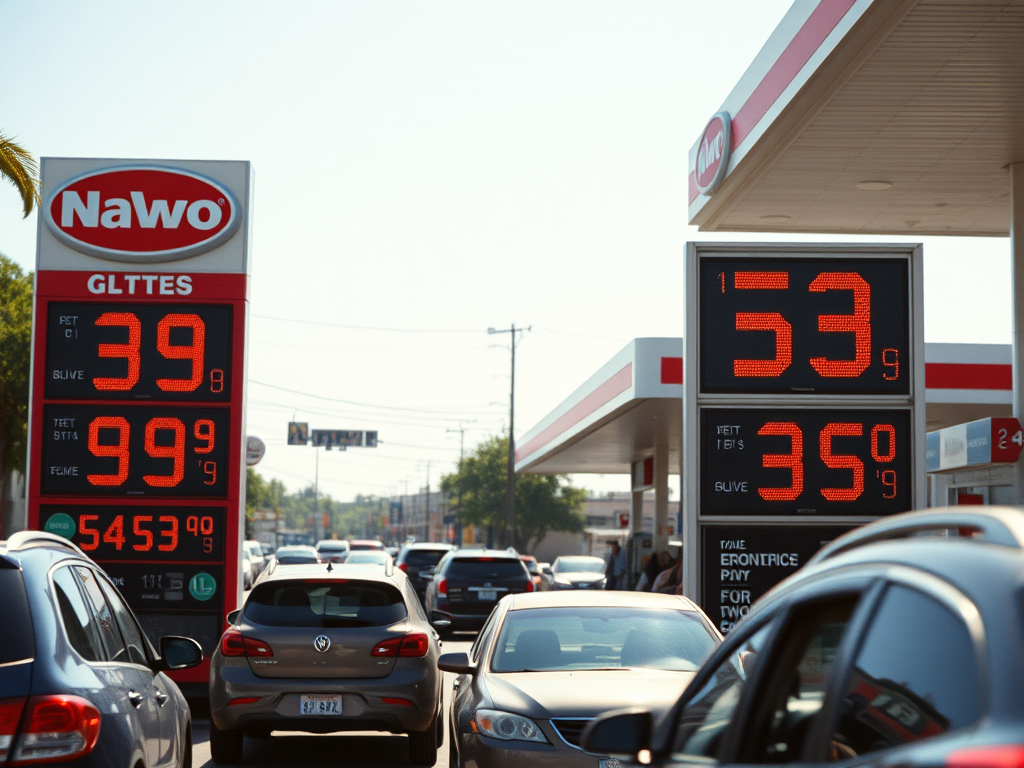

Gasoline prices are nearing or have dropped below $3 per gallon in many states, marking a return to a national average not seen since February, illustrating a notable decrease following a period of sharp inflation.
As of Tuesday, the average price for regular gas stood at $3.16, reflecting an 11 percent drop compared to last year, according to AAA. Prices have already fallen below $3 in 19 states, including key states like Georgia, North Carolina, and Wisconsin.
This decline has made refueling significantly more economical than usual ahead of a presidential election.
Gas prices, along with the costs of staples such as eggs and milk, are often cited by politicians and the public as indicators of economic health and financial well-being. The visibility of gas prices constantly reminds drivers of their daily commuting costs.
Currently, Americans are spending about 2 percent of their disposable income on gasoline, less than during previous presidential election cycles, except for 2020 when prices plummeted due to the pandemic, according to ClearView Energy Partners.
Vice President Kamala Harris has highlighted the positive economic news, attributing the reduction in gas prices to the Biden administration’s actions, such as releasing fuel from reserves and easing certain regulations.
Former President Donald Trump has claimed he could lower prices to under $2 per gallon, part of a broader commitment to halve overall energy costs, though he hasn’t detailed his plan.
Many consider this goal unrealistic; the last time gas prices were below $2 was in June 2020, during the early pandemic when oil demand fell sharply.
Two years later, prices soared to $5 a gallon after Russia’s invasion of Ukraine, significantly contributing to global inflation.
While presidential influence exists, fuel prices are primarily driven by market conditions. Typically, prices drop in the fall due to shorter days and cooler weather, which reduce driving.
Oil prices have also decreased by over 15 percent in the past year to around $72 a barrel as indications suggest a potential surplus in crude oil. U.S. oil production is increasing, while demand in China is waning.
The Organization of the Petroleum Exporting Countries (OPEC) and its allies have attempted to stabilize prices through production cuts, with plans to potentially increase output in December.
Future oil prices could rise again if conflicts in the Middle East disrupt production or shipping.
Currently, one of the primary contributors to U.S. inflation in recent years is helping to ease economic pressures. Diesel prices have fallen even more sharply, now at $3.59 compared to around $4.50 last year.
“Lower gas prices lift everyone’s spirits,” said Jared Scheeler, CEO of Hub Convenience Stores, which operates gas stations in North Dakota.
Americans are consuming less gasoline, with improved energy efficiency and the rise of electric and hybrid vehicles leading to about a 4 percent decline in domestic consumption since 2019, according to the U.S. Energy Information Administration. Many analysts doubt a return to pre-pandemic consumption levels.
Gas stations are offsetting reduced foot traffic by increasing fuel prices. Current average margins on gasoline have risen to about 39 cents per gallon, up from 24 cents in 2019, surpassing inflation rates, according to the Oil Price Information Service.
“Higher overhead costs play a role, but much of this is about opportunity,” noted Tom Kloza, global head of energy analysis at OPIS. “The market can support it.”
Jeff Lenard, vice president at the National Association of Convenience Stores, attributed rising gasoline margins to increased costs, like labor and credit-card fees, as well as shifting consumer habits. Some drivers now prefer to fill up at locations where they can also buy food, rather than seeking the cheapest gas.
Large convenience store chains are especially benefiting from this pricing power. Alimentation Couche-Tard, the Canadian company behind Circle K gas stations, reported a gross margin of 48 cents per gallon in the U.S. for the three months ending in late July, up from under 27 cents in 2019, with the company’s quarterly profit jumping nearly 50 percent during that time.




Leave a Reply