

This fall, college campuses are notably quieter than last spring, yet some anti-Israel rhetoric has become alarming, particularly in its endorsement of Hamas’s violence. The disturbing trend is the repeated glorification of the massacre of over 1,200 people by Hamas during their surprise attack on October 7 last year.
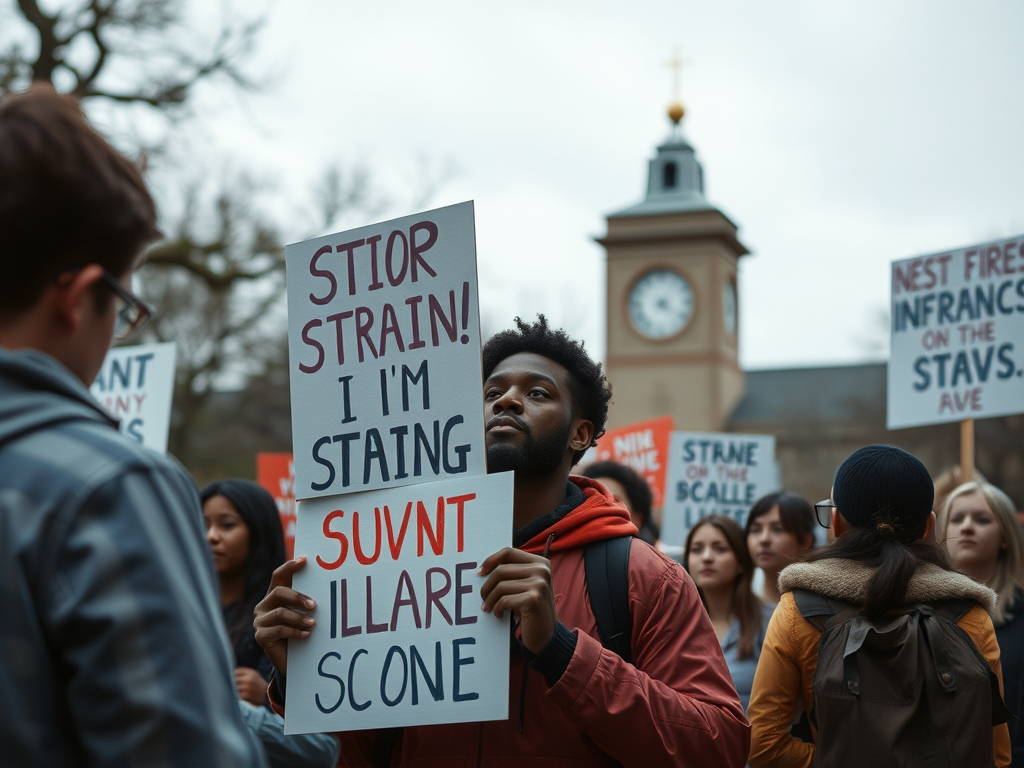
On October 8, approximately 1,000 people gathered at the University of California, Berkeley, where I serve as law school dean, to mark the anniversary of that attack. About half were students, and many protest signs openly celebrated the violence: “Israel deserves 10,000 October 7ths,” one proclaimed. Another sign echoed Hamas’s term for the attack: “Long Live Al-Aqsa Flood.”
At Berkeley’s central clock tower, a large banner read “Glory to the Resistance,” displaying an inverted red triangle, a symbol used by Hamas to signify Israeli targets.
Meanwhile, at Columbia University, the group Apartheid Divest described the Hamas assault as a “moral, military, and political victory.” They even withdrew their previous criticism of a student who had made inflammatory remarks about Zionists during a disciplinary hearing.
This group stated, “We support liberation by any means necessary, including armed resistance,” and argued that violence becomes the only option when peaceful resolutions fail.
In Rhode Island, Brown University’s Students for Justice in Palestine chapter referred to the Hamas attack as a “historic act of resistance against decades of occupation, apartheid, and settler colonial violence.”
These instances are part of a larger pattern. The Anti-Defamation League reported similar protests and rhetoric at over 100 campuses nationwide, where participants openly celebrated Hamas’s deadly assault.
The attack on October 7, 2023, marked the deadliest assault on Jews since the Holocaust, resulting in horrific acts of violence, including rape and the slaughter of families. Approximately 250 hostages were taken, with over 60 still believed to be in Hamas’s custody.
While it’s vital to discuss Israel’s actions over the past year and the devastation in Gaza, these campus demonstrations do not represent that discourse. They primarily celebrate the cold-blooded murder of innocents. Regardless of one’s stance on the Middle Eastern conflict, the celebration of mass murder cannot be justified.
This support for violence is deeply troubling, as is the silence of university officials. Would they remain silent if a Ku Klux Klan rally were held on campus to celebrate white supremacist violence?
We must expect—and demand—that campus officials respond to celebrations of Hamas with the same condemnation they would express towards a Klan rally. While the First Amendment protects free speech at public universities, and even at private institutions that value free expression, it does not absolve universities from taking action.
Title VI of the 1964 Civil Rights Act prohibits discrimination based on race, color, or national origin in colleges receiving federal funds, which includes preventing harassment that creates a hostile environment. Such an environment exists when conduct is severe, pervasive, or persistent enough to hinder students’ ability to participate in their educational experience, including discrimination against Jewish students.
Colleges can violate Title VI if they recognize a hostile environment but fail to act. The Education Department has outlined several measures universities can adopt, such as offering support to affected students and fostering a respectful campus environment.
Importantly, university officials can also express their community’s values and denounce hateful speech through their own statements.
Listening to my Jewish students, it’s evident they feel a hostile atmosphere. A sign stating “Israel deserves 10,000 October 7ths” in a central campus area makes them uncomfortable. They rightfully fear that celebrating violence could incite further violence.
I understand the hesitation among university officials to take a stand; it’s often easier to remain silent than to provoke dissent among campus groups.
However, silence sends a powerful message, and in legal terms, inaction may be interpreted as deliberate indifference, violating Title VI and prompting scrutiny from the Department of Education’s Office for Civil Rights.
At a minimum, campus officials should convey a clear message: “While those who praise Hamas’s terrorism have the right to express their views, we have a duty to state that celebrating murder, rape, and hostage-taking is fundamentally offensive and contrary to the values of this university.”
This statement should not require extraordinary courage to deliver.




Leave a Reply