
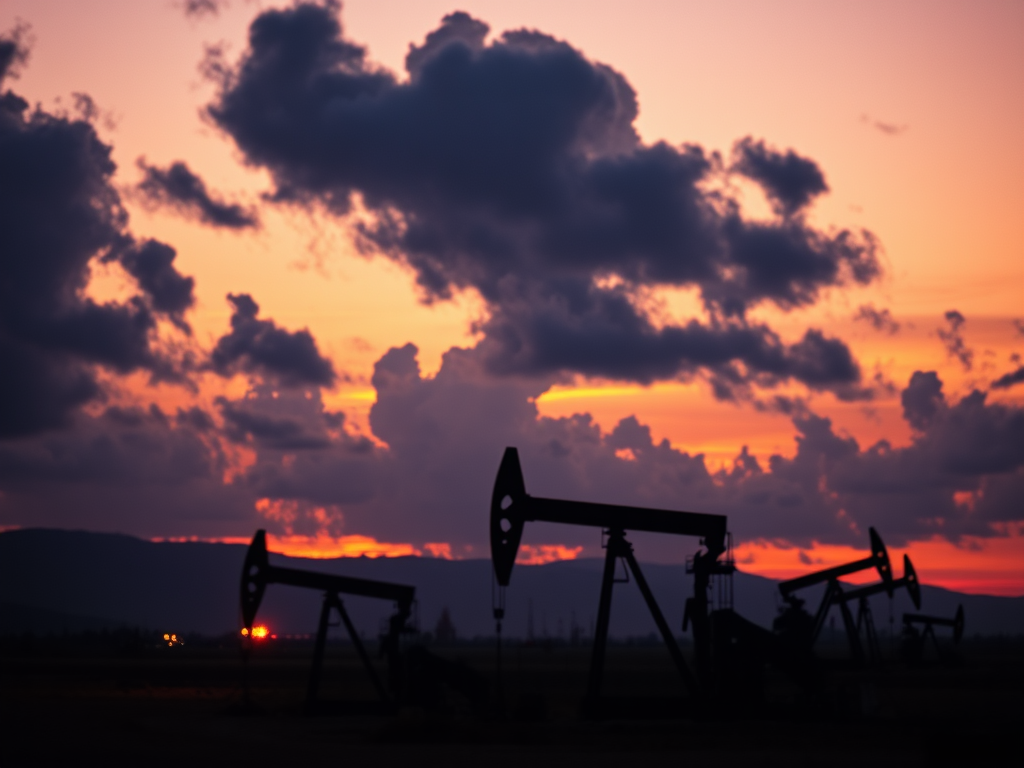

The escalating tensions between Israel and Iran have shaken the oil market, driving up prices as investors brace for possible disruptions to the global oil supply.
Oil prices have surged since Iran launched around 200 ballistic missiles at Israel last week. Brent crude, the global oil benchmark, soared above $81 a barrel in the days following the attack, marking a 15 percent increase. On Friday, it settled at around $79 a barrel.
Despite growing concerns among traders, current prices remain lower than they were in July, which is surprisingly low given the geopolitical turbulence. “In a normal situation, prices would have skyrocketed,” said Fatih Birol, executive director of the International Energy Agency, during a webinar on Wednesday.
However, several factors are keeping prices in check, including slowing demand in China, rising production in the U.S. and other nations, and the possibility that the OPEC Plus alliance might soon release more oil onto the market.
Analysts warn that Israel could target Iranian oil infrastructure, potentially provoking Tehran to retaliate against crucial global energy facilities. This could significantly disrupt oil production, a situation that hasn’t materialized in the past year of conflict in the Middle East, leading to even higher prices.
“We may be entering a cycle of retaliatory strikes between Israel and Iran,” said Bob McNally, president of Rapidan Energy Group and a former White House energy adviser. “Once that starts, predicting the outcome becomes impossible.”
McNally added that any prolonged or substantial disruption to energy flows from the Persian Gulf could push oil prices past $100 a barrel, likely triggering a global recession.
In a worst-case scenario, he estimated that up to a third of the global oil transported by sea, as well as essential liquid natural gas supplies from Qatar, could be halted due to Iranian actions or its allies.

Despite these alarming possibilities, oil prices remain moderate, well below the peaks of over $120 a barrel seen after Russia’s invasion of Ukraine in 2022.
Analysts note that markets are balancing short-term fears of supply outages caused by the conflict with longer-term concerns about weak oil fundamentals.
It’s not that oil is becoming obsolete, as demand is expected to grow this year—albeit at half the pace of 2023. Global oil storage levels are also relatively low, which is generally a positive sign for market health.
Yet, oil producers and traders are aware that the demand for crude oil and products like gasoline is not what it once was.
“This year’s slowdown in demand might signal the beginning of a long-term trend of weaker growth in oil consumption,” the International Energy Agency commented in a recent report.
China, once the main driver of oil demand growth, no longer plays that role, with no obvious successor in sight. Demand in China has cooled as electric vehicle adoption rises and broader economic shifts take place.
Elsewhere, demand is also sluggish, with factors such as electric vehicles, improved fuel efficiency, and lifestyle changes like working from home contributing to the slowdown.
Additionally, markets are aware that OPEC Plus is holding back more than five million barrels per day, roughly 5 percent of global demand.
Traders are still wary of a June agreement by eight OPEC Plus nations, led by Saudi Arabia, to gradually reverse some production cuts starting this fall.
In light of downward price pressure, this group recently decided to delay increasing production until at least December. However, traders anticipate that more oil will inevitably enter the market over time.
The Saudis have been urging other OPEC Plus members, including Iraq and Kazakhstan, to stick to agreed production quotas, as they want to avoid bearing the full burden of adjustments themselves.

“They don’t want people thinking it’s solely their responsibility,” said Richard Bronze, head of geopolitics at research firm Energy Aspects. He added that the Saudis and their allies are likely to prefer increasing output as planned in December.
Much will depend on whether other countries comply with their quotas, as the Saudis reserve the right to significantly boost oil production if needed.
At the same time, rising output from non-OPEC Plus countries, particularly the U.S., is exerting downward pressure on prices. In September, before the recent Middle East escalation, concerns about oversupply briefly drove prices below $70 a barrel, the lowest since 2021.
For now, the market’s attention is on whether Israel might target Iranian energy facilities, including the key export hub on Kharg Island.
Iran produces 3.4 million barrels of oil per day, accounting for more than 3 percent of global supply, and exports around 1.6 million barrels daily. If disruptions remain limited, the impact would primarily be felt in China, where smaller refineries import most of Iran’s oil, bypassing international sanctions.
“Any disruptions to Iranian oil supplies could push prices above $80 a barrel,” FGE, a consulting firm, noted recently. But if energy infrastructure remains untouched, prices may retreat to around $70 a barrel, the firm added.
There is also concern that Iran could strike other strategic targets. In 2019, missiles hit a major processing plant in Abqaiq, eastern Saudi Arabia, as well as other installations. Iran was widely blamed for the attack but denied involvement.
Since then, Saudi Arabia has improved its relations with Iran, which may offer some protection against a similar incident. “The recent Saudi-Iran rapprochement could deter an Iranian attack on Saudi infrastructure,” said Helima Croft, head of commodities at RBC Capital Markets.
Leaders from Gulf nations met with Iran’s president in Qatar last week, aiming to avoid getting caught in the conflict.
These countries are keen to stay off Iran’s target list, as their economic development goals depend on avoiding conflict, analysts at J.P. Morgan noted. Furthermore, Iran values its improved relations with Saudi Arabia and other regional states.
The Biden administration, too, would likely be cautious about taking actions that could cause a spike in U.S. gasoline prices just weeks before the November presidential election.




Leave a Reply